 pando
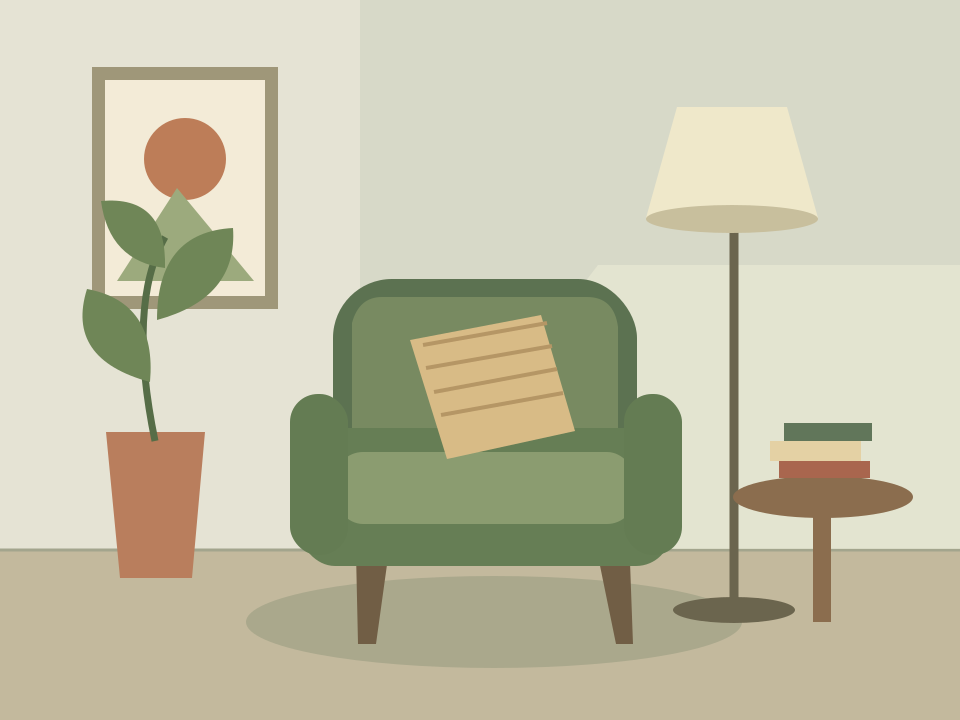
A reading corner is less about a particular chair and more about making it easy to sit down with a book. It can be one end of a sofa, a cushion near a window or a seat that changes purpose for half an hour.
Start with the seat you already like
Notice where you naturally settle when there is nothing urgent to do. That is often a better starting point than an empty corner that looks good in a photograph.
Try the spot at the time you usually read. Can you see the page comfortably? Is there somewhere to put a cup? A cushion, a nearby surface or a lamp moved from another room may be all it needs.
Make a place that invites you to sit, rather than asks you to improve it.
Keep the invitation small
A towering stack of books can start to look like a list of unfinished tasks. Keep one book within reach, perhaps with a second that offers something different: a few poems alongside a longer story.
Put a bookmark inside before you leave. Fold a blanket over the arm of the chair if you use one. These tiny preparations make the next visit feel easy, without turning the space into another thing to maintain.
Let the room keep being a room
The corner does not have to stay untouched. People will move the cushion, borrow the lamp or sit in the chair. A useful space can be shared and rearranged.
When you return, make the one adjustment that helps you settle. Open the book wherever you left it. A few pages are enough; the corner has done its job if it gave you somewhere to begin.